

If you manage a warehouse, distribution centre, or manufacturing site in the UK, barcode scanners are the single most impactful technology investment you can make. This guide covers everything you need to know — from choosing the right scanner type to getting the most out of your investment.
Why Barcode Scanners Are Still Essential in 2026
Despite the rise of RFID and computer vision, barcode scanning remains the dominant technology in UK warehouse operations. It’s reliable, cost-effective, and universally supported by every major WMS and ERP platform on the market.
According to a recent industry report, warehouses using barcode scanning systems report:
- Up to 67% reduction in picking errors
- 35% faster goods-in processing
- Stock accuracy rates of 99.9% or higher
- ROI achieved within 12 to 18 months on average
Types of Barcode Scanners
Not all barcode scanners are the same. Choosing the wrong type for your environment is one of the most common and costly mistakes we see. Here’s a breakdown of the main categories:
1. Handheld Barcode Scanners
The most common type found in warehouses. Handheld scanners are versatile, easy to use, and available in both corded and wireless versions. Ideal for goods-in, picking, packing, and despatch operations.
Best for: General warehouse use, retail, light manufacturing
2. Mobile Computers
Rugged devices that combine a barcode scanner with an Android or Windows operating system. Think of them as a smartphone built specifically for warehouse environments — drop-proof, dust-proof, and designed to run all day on a single charge.
Best for: High-volume operations, WMS integration, field-based workflows
3. Fixed Industrial Scanners
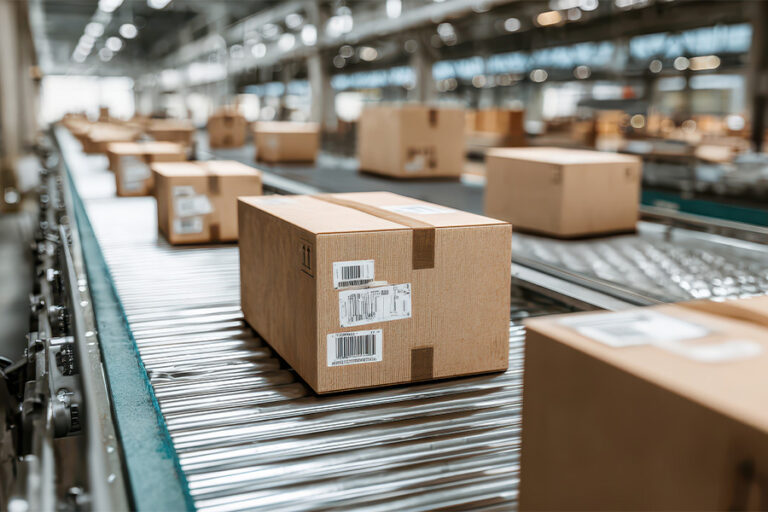
Mounted permanently on conveyor lines or at fixed scan points, these scanners read barcodes automatically without any human involvement. They can read hundreds of items per minute with near-perfect accuracy.
Best for: Automated conveyor lines, high-throughput sortation, parcel processing
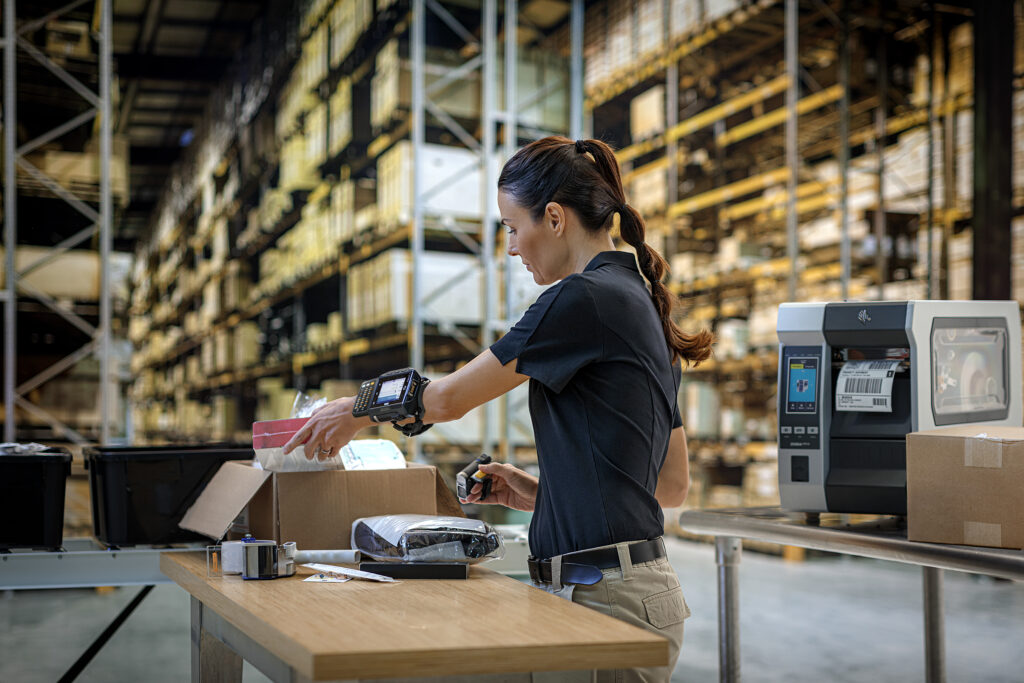
4. Wearable Scanners
Worn on the finger or wrist, wearable scanners free up both hands for picking and packing tasks. They’re increasingly popular in fulfilment centres where speed and ergonomics are critical.
Best for: Pick-and-pack operations, order fulfilment, voice-directed warehousing
Key Specifications to Look For
When evaluating barcode scanners, these are the specifications that matter most in a real warehouse environment:
- Scan Engine — 1D only, or 1D/2D capable? Most modern operations need 2D for QR codes and DataMatrix
- Drop Specification — How high a drop can it survive? Look for 1.5m minimum for warehouse use
- IP Rating — IP54 or higher for dust and moisture resistance
- Battery Life — Can it last a full 8-hour shift without recharging?
- Connectivity — WiFi 6, Bluetooth 5.0, and 4G/5G options for mobile workers
Zebra vs Honeywell — Which Brand Is Right for You?
The two dominant brands in the professional barcode scanner market are Zebra Technologies and Honeywell. Both produce excellent hardware — the choice often comes down to your existing software ecosystem and support requirements.
“We switched from a consumer-grade scanner to a Zebra TC52 mobile computer and the difference was immediate. Scan rates went up, errors went down, and our staff actually preferred using it.”
— Warehouse Manager, UK 3PL Provider
At Kelgray, we’re authorised partners for both Zebra and Honeywell, so we can give you an honest, unbiased recommendation based on your specific operation — not based on which brand pays us the highest margin.
How Much Do Barcode Scanners Cost?
Pricing varies significantly depending on the type and specification:
| Scanner Type | Entry Level | Mid Range | Enterprise |
|---|---|---|---|
| Handheld Scanner | £80 – £150 | £150 – £300 | £300 – £600 |
| Mobile Computer | £300 – £500 | £500 – £900 | £900 – £1,800 |
| Fixed Scanner | £400 – £700 | £700 – £1,500 | £1,500 – £4,000 |
| Wearable Scanner | £200 – £400 | £400 – £700 | £700 – £1,200 |
Common Mistakes to Avoid
After 54 years in the industry, these are the mistakes we see businesses make most often when buying barcode scanners:
- Buying consumer-grade hardware — cheap scanners from Amazon break within months in a warehouse environment
- Ignoring the software integration — the best scanner in the world is useless if it doesn’t talk to your WMS
- Under-specifying battery life — a scanner that dies at 3pm costs you more in lost productivity than you saved on purchase price
- Not considering ergonomics — your staff will use these devices for 8 hours a day; comfort matters
- Skipping the site survey — WiFi dead spots, lighting conditions, and conveyor speeds all affect scanner choice
Getting Started with Kelgray
We make it simple to find the right barcode scanner for your operation. Our process:
- Free consultation — tell us about your operation and we’ll recommend the right technology
- Site survey — we visit your site to assess your environment and existing infrastructure
- Demo units — we’ll put hardware in your hands before you commit to a purchase
- Installation & training — our engineers handle setup and train your team
- Ongoing support — UK-based support team, same-day response SLA available
Ready to find the right barcode scanner for your warehouse? Get in touch with our team today — no obligation, no hard sell, just honest advice from people who know this technology inside out.
Frequently Asked Questions
What is the difference between 1D and 2D barcode scanners?
A 1D scanner reads traditional barcodes (lines). A 2D scanner reads both traditional barcodes and matrix codes like QR codes and DataMatrix. Most modern operations should opt for 2D capability.
Can barcode scanners work with our existing WMS?
In almost all cases, yes. Professional-grade scanners from Zebra and Honeywell are compatible with all major WMS platforms including SAP, Manhattan, Infor, and most bespoke systems.
How long do warehouse barcode scanners last?
A quality enterprise barcode scanner should last 5 to 7 years in normal warehouse use. We recommend budgeting for replacement or refurbishment at the 5-year mark.
Do you offer rental or leasing options?
Yes — we offer flexible rental and leasing options for businesses that prefer to spread the cost or need hardware for a short-term project. Contact us for details.