


Print and Apply Labelling
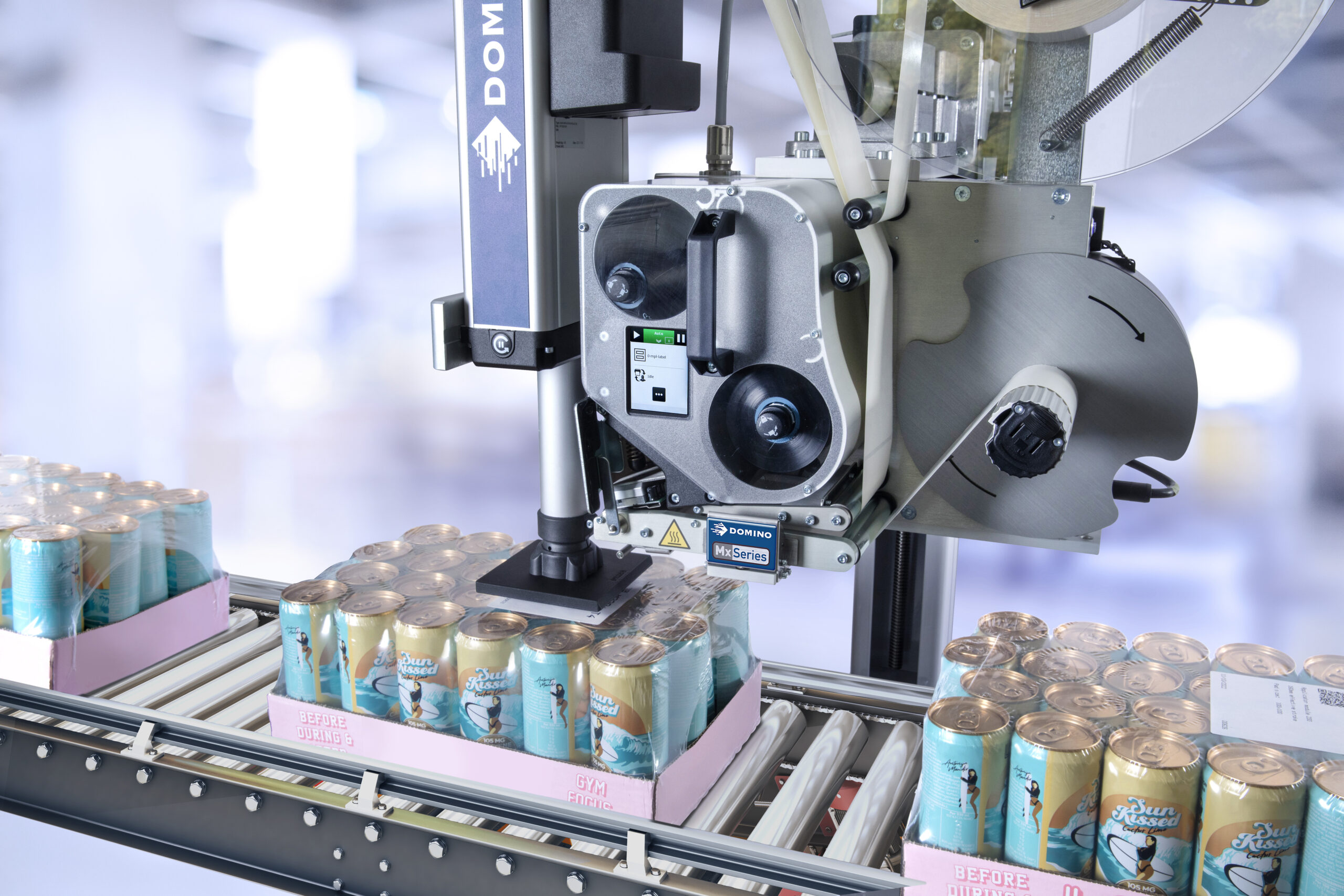
Print and apply labelling systems that print each label on demand and place it accurately, every time.
 4.8 Google Reviews



Print and Apply Labelling Overview
Kelgray, with over 50 years' experience, designs and installs print and apply labelling systems that print each label at the moment it is needed and apply it straight onto the product, case or pallet. No pre-printed label stock, no relabelling, no operator holding a hand applicator.
Our expert team handles everything from initial design and hardware integration to software and ongoing support. Every print and apply unit is matched to your line speed, your product presentation and the data your labels need to carry, so it fits your workflow rather than forcing you to change it.
Why Choose Print and Apply Labelling?
Print and apply labelling removes two jobs at once: printing the label and putting it on. A print and apply unit does both in a single automated step, using live data from your systems, so every label is current, correct and in the same place. That is crucial where information changes item by item - barcodes, batch codes, weights, addresses and serial numbers. Choosing the right partner matters just as much.
Kelgray brings experience, technical expertise and end-to-end service that go beyond just providing equipment, we make sure your print and apply solution delivers maximum value and reliability.

On-Demand Label Printing:
Each label is printed at the moment it is applied, straight from your live data. Variable barcodes, batch codes and addresses are always current, and there is no pre-printed stock to store or waste.

Accurate, Repeatable Placement:
Tamp, blow and wipe applicators place every label in the same position to within millimetres, so barcodes scan first time and packs look consistent.

Speed That Matches Your Line:
Print and apply units print the next label while the current one is being applied, keeping pace with your conveyor rather than holding it up.

Expertise & End-To-End Support:
With over 50 years' experience, we provide a complete service, from system design and installation to training and ongoing maintenance, for a seamless automation journey.
Kelgray Specialises In End-To-End Service Solutions
Kelgray is one of the few companies to offer an end-to-end automated labelling solution, managing the entire process from system design to ongoing support.

STRATEGIC SOLUTION DESIGN
We design bespoke labelling systems using 45+ years of engineering knowledge for optimal operational efficiency.


WORLD-CLASS TECH & SUPPLY
Get advanced scanners, printers, and bespoke Kelgray software, ensuring reliable and cutting-edge performance.
SEAMLESS SYSTEM INTEGRATION
Our specialists provide flawless installation, integration, and quick deployment with minimal disruption to your operations.
CONTINUOUS OPERATIONS
We ensure continuous, reliable operation with comprehensive support and in-house manufactured consumables.

Trusted by leading brands

Client Testimonials
Don't Just Take Our Word For It...
Lester Controls has relied on Kelgray for many years. The support they provide is exceptional, and their extensive product knowledge places them at the forefront of the industry. We look forward to continuing our partnership for many years to come.


Having partnered with Kelgray for over 20 years, we have consistently experienced exceptional product knowledge, reliability, and service. They remain a trusted supplier we confidently rely on.

Kelgray provide ILG with outstanding value and quality, supporting our multi-site nationwide requirements. Their service and support is reliable, affordable, and always delivered on time.


Our Frequently Asked Questions
Here are all of the answers to your most common questions around print and apply labelling:
A print and apply labelling system is a machine that prints a label on demand and applies it directly to a product, case or pallet in one automated step. It pairs an industrial label printer with an applicator arm, so the label is produced and placed without anyone touching it. Because each label is printed at the moment it is needed, the information on it can change from item to item. Barcodes, batch codes, weights, addresses and serial numbers all come from live data. The unit sits on your production line and labels items as they pass. Print and apply replaces two separate manual jobs, printing labels in advance and sticking them on by hand, with one reliable automated process.
The difference is the printer. A standard label applicator applies labels that have already been printed, so every label in the roll is identical. A print and apply labeller prints each label as it goes, which means the content can be different every single time. If your labels carry fixed branding or a single fixed barcode, a plain applicator may be all you need. If they carry variable data such as unique barcodes, batch or lot numbers, weights, use-by dates, despatch addresses or serial numbers, then you need print and apply. Most warehousing, logistics and traceability applications fall into the second group. We will tell you honestly which of the two suits your line, because there is no value in selling you a printer you do not need.
If your labels change from item to item and someone is currently printing and applying them by hand, the answer is usually yes. Three signs point to it clearly. First, an operator is spending a meaningful part of their day peeling labels off a printer and placing them on products or pallets. Second, you are getting mislabelling errors, failed barcode scans or rejected deliveries because labels are wrong, crooked or in the wrong place. Third, labelling is slowing the end of your line down, or stopping you taking on more volume. If none of these apply and your label content never changes, a simpler applicator or a standalone printer may be the better fit. We would rather assess your line and tell you that than sell you more automation than you need.
That depends on three things: label size, applicator type and how your products present themselves to the machine. Print and apply units print the next label while the current one is still being applied, which is what allows them to keep pace with a moving line rather than hold it up. Smaller labels print faster than large ones, and a blow applicator places a label without touching the product, which is quicker than a tamp stroke on some applications. Rather than quote a number that may not apply to you, we measure your actual line speed and product spacing, then specify a unit that keeps up with a margin to spare. That way the labeller never becomes the bottleneck you bought it to remove.
Yes. GS1-compliant pallet labelling is one of the most common uses for print and apply. The system pulls the pallet data from your warehouse or ERP system, prints the SSCC barcode and supporting information, then applies the label to the pallet as it leaves the line. We can configure single, two-sided or three-sided application depending on what your customers and your own traceability need. Retailers and distributors increasingly insist on correctly formatted, correctly positioned pallet labels, and a manual process struggles to deliver that consistently. An automated print and apply pallet labeller removes the risk of a rejected delivery caused by a missing, misplaced or unreadable label.
Yes, though flexible packaging needs more careful design than a rigid box. Bags and pouches move, flex and rarely present a perfectly flat surface, so a label applied the wrong way creases or lifts at the corners. We select the applicator method to suit the pack. A blow applicator places the label using air, without any physical contact, which works well on soft or uneven surfaces. Where the pack needs support, we add hold-down belts or a flattening section so the label goes onto a stable surface. We handle bags, pouches, boxes, cases, trays, totes, bottles and cans, and we test the application on your actual packaging before we commit to a design.
Yes. Our engineers assess your current setup and design the print and apply unit to fit into it, rather than asking you to rebuild around the machine. Mechanically, the unit is mounted to suit your conveyor and synchronised with your line speed and sensors, so it labels each item at the right moment. On the data side, we connect the system to your existing databases, ERP or warehouse management system so label content is pulled live at the point of printing. We also develop bespoke software where an off-the-shelf connection does not exist. The result is that the labeller prints exactly what you need on each label, at the moment you need it, using data you already hold.
We provide comprehensive support and maintenance for every system we install. After commissioning your print and apply solution, we train your team so they can run and reload it confidently. Our technicians are available by phone if anything goes wrong, and we can arrange regular maintenance visits to keep the equipment in peak condition and prevent unplanned downtime. We also supply the consumables that keep the system running (self-adhesive labels and thermal transfer ribbons) which we hold and manufacture in-house, so replacements arrive quickly rather than on a long lead time. Maintenance contracts and service agreements are available if you want priority support and a fixed cost for the life of the system.