


Automated Labelling
Coding & Marking Solutions
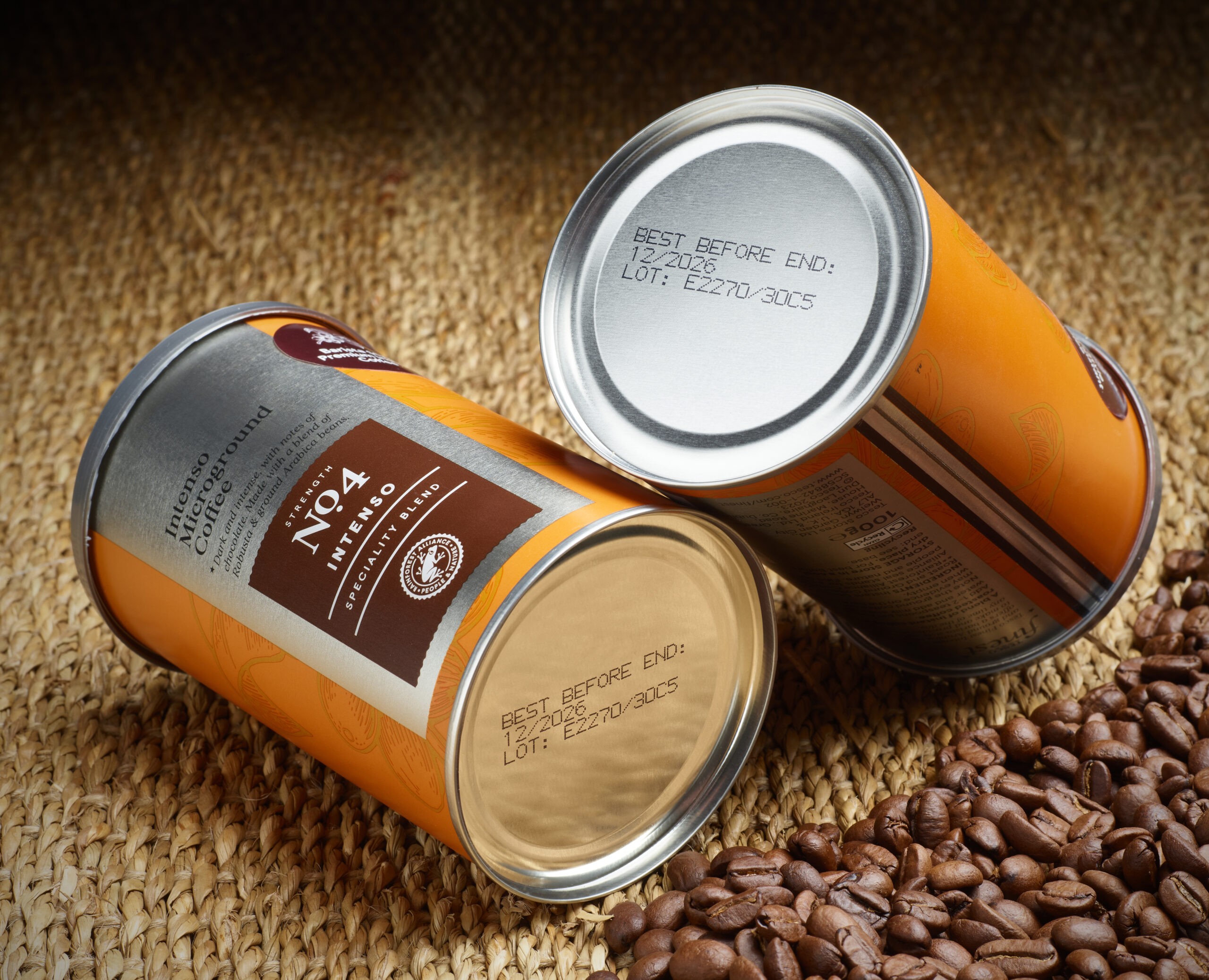
Automated coding and marking systems print batch codes, dates, and text on products with precision.
 4.8 Google Reviews



Coding and Marking Overview
Kelgray’s coding and marking solutions automatically print essential information like expiry dates, batch numbers or barcodes directly on your products. Our printers produce clear, permanent codes. Integrated into your production line, they eliminate manual stamping or labelling. The result is fast, error-free coding that keeps every product fully traceable.
Service information
Our scanning solutions are versatile and high-performance. We offer laser-based barcode scanners and image-based (camera) scanners depending on your needs – from reading traditional 1D barcodes to complex 2D codes like QR or DataMatrix.
These scanners are capable of reading codes on fast-moving items, even at odd angles or on challenging surfaces. For example, in a distribution centre we can deploy a multi-sided scanning tunnel with multiple readers so that a barcode on any side of a carton gets picked up without slowing down.
We carefully configure aspects like focal distance, lighting and mounting to ensure maximum read accuracy. The scanned data is relayed to your systems in real time, allowing immediate actions (such as verifying the right label is on the right parcel, or routing a box down the correct conveyor).
Our solutions are also smart – if a code is unreadable or missing, we can set up alarms or divert that item for inspection. With robust industrial housings, these scanners run reliably in harsh conditions. Kelgray handles the entire integration – from choosing the right scanner hardware to programming the software that uses the scan data.

Why Choose Kelgray for Coding/Marking?

Guaranteed clarity:
Our systems print crisp, legible codes every time by using the right technology and inks for your product surfaces. No more faint or smudged markings causing rejects.
Efficient compliance
We ensure your codes meet industry and retailer requirements – from date formats to barcode standards. We configure the system for compliance, minimising the risk of code-related rejections.
Line integration
We integrate coding equipment into your production flow. The coders sync with conveyors or fillers to print at just the right moment without slowing the line.
Complete support
We provide all necessary equipment and handle installation. Our team provides training and maintenance to keep coding reliable, and since direct coding uses no labels, you cut material waste.
Trusted by leading brands

Client Testimonials
Don't Just Take Our Word For It...
Lester Controls has relied on Kelgray for many years. The support they provide is exceptional, and their extensive product knowledge places them at the forefront of the industry. We look forward to continuing our partnership for many years to come.


Having partnered with Kelgray for over 20 years, we have consistently experienced exceptional product knowledge, reliability, and service. They remain a trusted supplier we confidently rely on.

Kelgray provide ILG with outstanding value and quality, supporting our multi-site nationwide requirements. Their service and support is reliable, affordable, and always delivered on time.


Our Frequently Asked Questions
Here are all of the answers to your most common questions around coding & marking :
A: In manufacturing, “coding” or “marking” refers to printing essential information directly onto products or their packaging. This could include expiry dates, batch or lot numbers, serial numbers, barcodes, production dates, or other regulatory info. Unlike a label, which is a separate sticker, coding/marking typically uses an inkjet printer or laser etching device to put the text or code onto the item itself (for example, printing a use-by date on a soda can or etching a lot number on a glass bottle). It’s an automated process that ensures every product carries the required information for traceability, safety, and compliance.
A: We provide a range of industrial coding technologies. The main types are Continuous Inkjet (CIJ) printers, Thermal Inkjet (TIJ) printers, and Laser coders. CIJ printers are great for ultra-fast printing on moving products (like printing dates on beverage bottles on a high-speed line). TIJ printers use replaceable cartridges and are excellent for high-resolution codes on porous surfaces like boxes or for lower-volume lines. Laser coders use a focused light beam to permanently mark the surface – ideal for products where you don’t want to use ink, such as marking lot numbers on glass or plastic that won’t rub off. We’ll recommend the best technology based on your product material, production speed, and the content you need to mark.
A: Automated coders can mark on virtually any common packaging material. We routinely set up systems to print on glass bottles, plastic containers (like HDPE, PET, PVC), metal cans or tubes, cardboard cartons, labels or film, and even on flexible packaging like pouches. The key is selecting the right printer and ink for the surface: for instance, using quick-drying alcohol-based inks on non-porous materials like metal or plastic, or special food-grade inks on food packaging. In cases where ink isn’t suitable, laser marking can directly etch or discolor the surface (like engraving a code on a plastic cap). During our consultation, we’ll ensure the chosen solution produces a durable, legible code on your specific material.
A: Yes. Kelgray’s coding/marking systems are designed to integrate smoothly into existing production lines, even high-speed ones. We use sensors and encoders to sync the printer’s activity with your line movement. For example, a sensor can detect an approaching product and trigger the printer at just the right time to mark it in the correct spot. The coding device can be mounted on your conveyor or at a transfer point, and it will print “on the fly” as products pass – meaning you don’t have to stop or slow the line. Our team configures the timing and positioning so that coding becomes a seamless part of the process. In short, you get accurate codes on each item with no impact on throughput.
A: Absolutely. We understand that codes like expiry dates or batch numbers must remain legible through the product’s lifecycle and meet any regulatory or quality standards. The solutions we provide are chosen to ensure durability – for instance, inks that are water-resistant or heat-resistant if your product later undergoes processes like pasteurisation or freezing. Laser markings, being etched, are inherently permanent. In terms of compliance, we make sure the code format (font size, placement, content) adheres to industry rules, such as pharmaceutical guidelines or retailer requirements. We can also include vision systems if needed to automatically verify that each code is present and readable. With Kelgray’s system, you can be confident that every product leaving your line has a clear code that won’t smudge or fade away.
A: Maintenance and consumables depend on the technology. Inkjet coders will require ink and solvent fluids; you’ll need to replenish these, and the printers have filters and printheads that benefit from regular cleaning and occasional replacement. Kelgray supplies the proper inks and parts, and our technicians train your team on basic upkeep like cleaning printheads to prevent clogs. Laser coders, on the other hand, don’t use ink, so they have less day-to-day consumable needs – typically just periodic cleaning of the lens and ensuring the cooling system is working. We offer maintenance plans to perform routine service on your coding equipment, whether inkjet or laser, to maximise uptime. And if anything goes wrong, our support team is ready to assist so you can get back to full operation quickly.
A: It depends on the type of information and your product. Direct coding (using inkjet or laser) is ideal for small, required details like dates, batch numbers, or simple barcodes – information that doesn’t require a large area or colour graphics. It’s fast and cost-effective for high volumes, and it doesn’t add any extra materials (no label stock). However, labels might be better if you need to display extensive information, branding, or if the surface isn’t suitable for printing. For example, a nutrition facts panel or a multi-language ingredient list would go on a label, whereas the expiry date and lot code could be printed directly on the product. Many operations actually use both: a printed label for branding and variable data coding for dates or serials. Kelgray can help with both solutions, and we’ll advise on the best approach or combination for your needs.
Specialist Coding & Marking Solutions Options
For a full packaging line solution, consider our Filling and Capping systems alongside coding/marking, so containers are efficiently filled, sealed, and marked in one streamlined process.
TTO
High-resolution TTO printing delivers crisp variable data on flexible films, sustaining reliable, fast packaging lines.

